

From Grief to Celebrating a Life: How to Remember a Loved One
Remembering someone who has passed is not falling behind: it is another way of continuing to love. How to move from grief to celebrating a loved one's life and keep their memory alive.
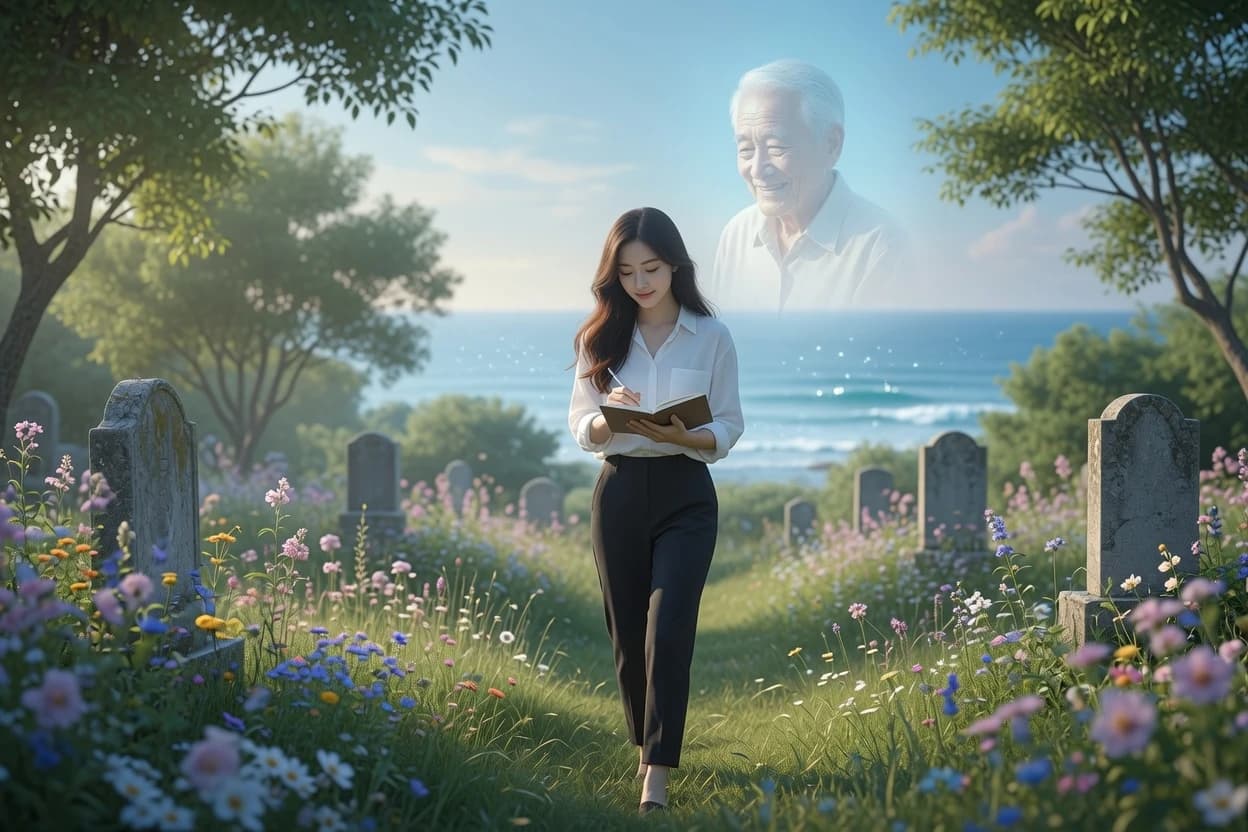
Grief cannot be rushed
There is a silence that comes after a loss. The phone stops ringing, visits grow less frequent, and the world returns to its rhythm as if nothing had happened. But inside, time moves more slowly. Everyone lives it in their own way: some need to talk and some need to be quiet, some cry on the bus and some hold on until they get home.
None of this can be hurried. If you are reading this with the pain still fresh, there is no lesson you have to learn today. Grief has its own clock. What follows is not a push to “get over it,” but a question for when you are ready.
What if remembering were another way of continuing to love?
For a long time we were taught that healing meant letting go. Turn the page, close the chapter, move on. As if affection had an expiration date and holding on to it were a problem to be solved.
The psychology of grief tells a different story today. The idea of continuing bonds proposes that the tie with the person who is gone does not break: it changes. Remembering, speaking to them in your mind, carrying with you what they taught you, is not denying the loss. It is loving in a different way. The question stops being how to forget and becomes how to remember well.
A thread that runs through every culture
It is striking how much traditions that resemble each other in almost nothing agree. The words, the rituals and the names for what comes next all differ. But nearly all of them say, in their own way, that the bond does not end with death.
In Mexico, the festivities dedicated to the dead, recognized by UNESCO as a heritage of humanity, do not dress in black: they bring flowers, candles and the favorite food of the one who left, to celebrate their return for a night. Christianity speaks of reunion and of life that goes on. In the Jewish tradition, the deceased is named with the words “may their memory be a blessing.” Some believe in reincarnation, others that the person lives on in those who loved them. In southern Chile, the Mapuche people accompany the one who dies on their journey to the land of the ancestors.
Different wrapping, same heart: when we remember someone, in some way they are still here. Souls are reunited. The soul, for those who have faith. Memory, for those who do not. And both are true, because every time we tell a story about someone who is no longer with us, we have them back at the table for a while.
Concrete ways to remember a loved one
Remembering well is not one grand gesture. It is many small ones, repeated, that give presence back to the person who has gone. Some things that help:
- Tell their stories out loud. The anecdote that made people laugh, the phrase they repeated, the quirk you now miss. Saying their name does not reopen the wound: it brings them back into the conversation for a moment.
- Look through and organize their photos. Not the ones from the end, but the happy ones. Choose those that tell who they were and gather them in one place before they get lost in drawers and phones.
- Mark the dates in your own way. A birthday, an anniversary. Instead of a sad day, an excuse to get together and celebrate that they existed.
- Keep an object, a recipe, a song. The senses anchor memory better than any speech. Their favorite dish on the table says more than a thousand words.
- Write to them. A letter to someone who is no longer here sorts out inside what was left unsaid.
They all have something in common: they need a place to live. Otherwise, they fade over the months.
From one day a year to a place that never goes out
The problem is not that we do not know how to celebrate life. It is that we usually do it in isolated moments. The funeral, which brings everyone together just once. The altar set up for a date. The visit to the cemetery every so often, with flowers that wilt before the next one.
These are beautiful rituals, but fleeting. Memory would like to last longer than one day a year. It would like to be available on the sleepless night, on the birthday that arrives all the same, at the moment a grandchild asks what their grandfather was like and nobody has a photo or a well-ordered story at hand.
What if the celebration, instead of an event, were a place? A place to return to whenever you want, not only when the calendar says so.
Today's form for an age-old impulse
That human impulse to keep memory alive has always needed a support. A headstone, a portrait on the dresser, a name carved in stone. Today it can live in a digital memorial: a space with room for the happy photos, the stories, the voices of those who loved them, and to which anyone in the family can add their own.
It has two sides, like memory itself. One is visiting: entering the page of a loved one, reading their story, leaving a flower, finding them there whenever you need to. The other is creating: opening that space for someone who has passed, gathering what is scattered into one place and caring for it over time. Anyone can do the first. The second is done by whoever decides that this life deserves a place that never goes out.
It does not replace the cemetery or the candle at home. It extends them. It turns them into a memory you can reach from anywhere, that does not wilt and that does not depend on a single person to stay alive.
From grief to celebration
Moving from grief to celebrating a life is not skipping the pain. It is going through it to the other side, where one day you discover that thinking about the person who is gone no longer only hurts: it also warms. That you can smile while telling what they were like. That remembering them well is the last way of caring for them.
A person truly dies on the day no one remembers them. As long as there is a story to tell, a photo to look at, a flower to leave, they are still here. That is the celebration that never ends. And it begins with something as simple as giving them a place.