

Day of the Dead 2026 events: how the celebrations are changing
Day of the Dead no longer fits in two days: in 2026 Albuquerque celebrates it for ten, and Mexico City is preparing nearly five thousand activities. Dates, community altars, marigolds and sugar skulls, and how to carry the ofrenda into online memory too.
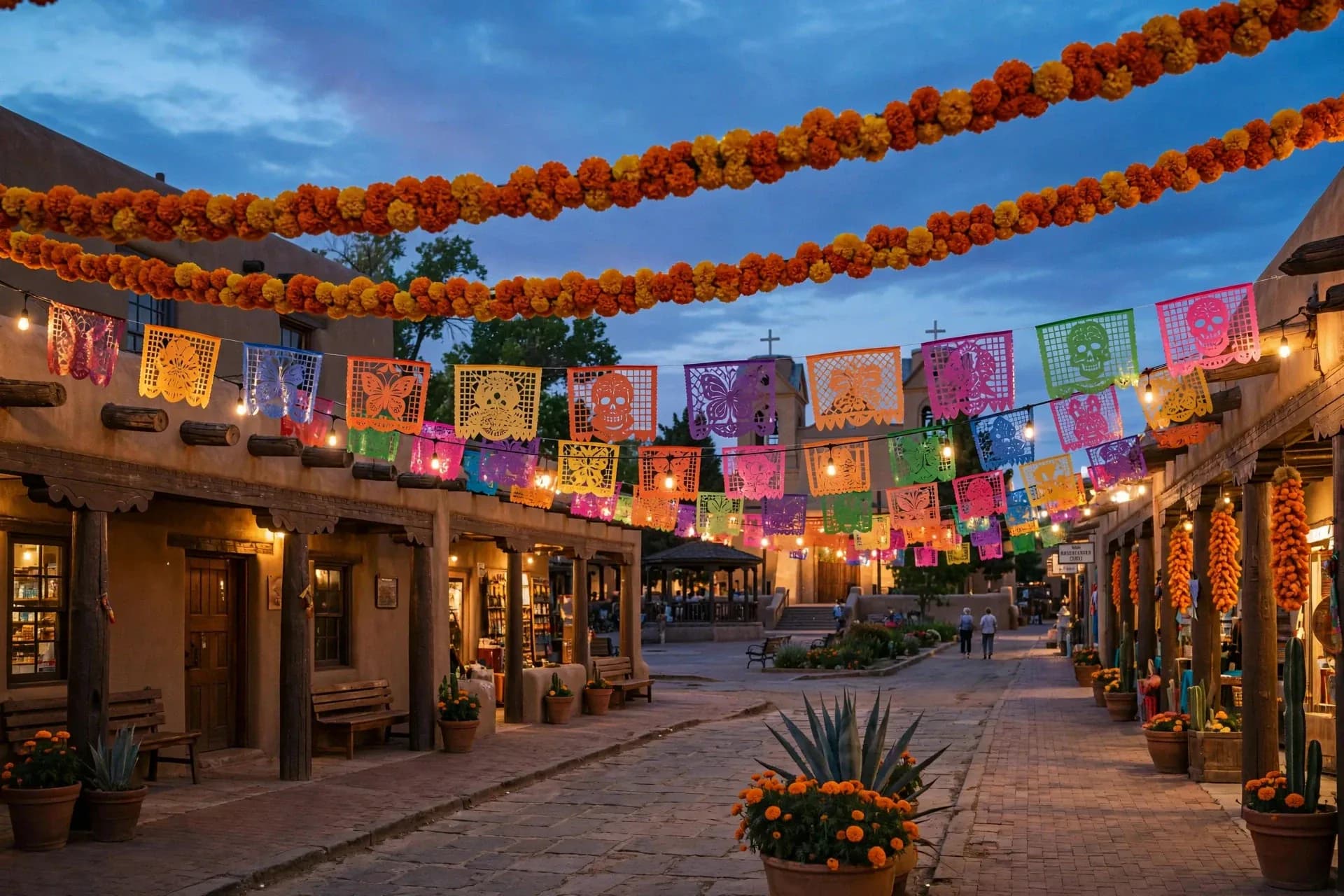
Quick summary: Day of the Dead no longer fits in two days. In 2026, Old Town Albuquerque celebrates it from October 30 to November 8, with more than 30 ofrendas spread across courtyards and portals, and Mexico City is preparing nearly five thousand free activities. Marigolds and sugar skulls remain at the heart of the ofrenda, and online memorials make it possible to join in from anywhere.
Old Town Albuquerque: ten days from October 30 to November 8
Old Town Albuquerque, in New Mexico, reaches the fourth edition of its Día de los Muertos. For ten days, the historic district around San Felipe de Neri church fills with music, ofrendas and garlands, according to the official festival program.
What the program includes
- Globitos: 20-foot model hot-air balloons, lit from inside, that fill the street and the church courtyard.
- Coco under the stars: free screenings of the film within the adobe walls of the church courtyard.
- Catrina procession and Matachines dance: skeleton costumes through the streets and a centuries-old New Mexican tradition.
- Candlelight procession: on November 2, half an hour after sunset, in memory of loved ones. Everyone is welcome.
- Plaza de los Recuerdos: on November 1 and 2 only, the plaza is covered with more than 50 ofrendas brought by the community itself. Anyone can sign up to set one up, though spots are limited.
Self-guided walk through more than 30 ofrendas
Every day of the festival there is a walk through more than 30 ofrendas tucked into courtyards and portals, each with its own theme, guided by an official map. The Marigold Mile adds more than 15,000 feet (about 4.5 kilometers) of marigold garlands hung from beams, lanterns and adobe walls. If you want to honor someone from afar, an online memorial lets you join the procession with your own memory.
Day of the Dead altars take to the streets
The ofrenda no longer lives only at home. The 2026 festivals bring it to plazas and portals, with community altars anyone can visit, and also help build.
The levels and the core that does not change
What goes on a Day of the Dead altar? The essentials fit in a short list:
- Marigolds (cempasúchil): their scent and their path of petals guide the souls.
- Water: quenches the traveler's thirst.
- Candles: the light along the way.
- Pan de muerto: the shared bread.
- Sugar skulls: a reminder of the cycle of life.
- Portrait and personal belongings: the bond with the one who is gone.
According to this guide to their meanings, the traditional altar has three levels: heaven, earth and the underworld. Seven-tier altars represent, in the pre-Hispanic worldview, the steps from the earthly world to the world of the dead.
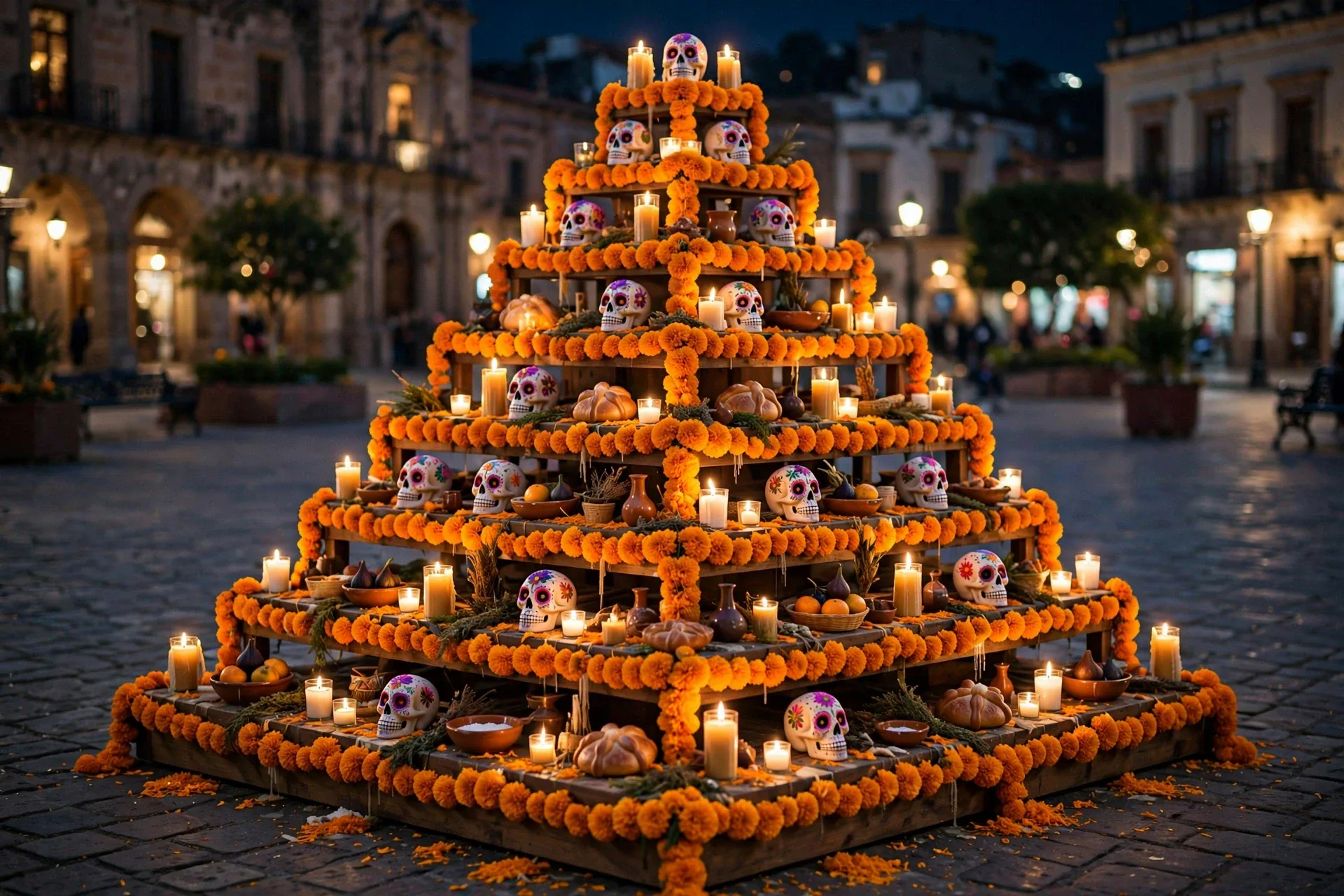
What an altar looks like today
The basics remain, but the format is opening up. Seven-tier altars sit alongside collective ofrendas, mass-produced papel picado alongside local crafts, printed photos alongside screens. If your family celebrates far away, an ofrenda can add a QR code that leads to an online memorial with the same portrait and a lit candle.
Marigolds and sugar skulls: the two objects that sum up the ofrenda
Short answer: sugar skulls go on the altar because they remind us that death is part of life. They look at it with sweetness and humor, and the name written on the forehead gives back a place to the one who returns to visit every November 1 and 2.
The scent of marigolds as a guide
The cempasúchil, the flower of the dead, marks the way. Its yellow petals form a path to the altar, and its scent, the legend says, crosses from the world of the living to the world of the dead. For the Mexica, the flower's yellow represented the sun and life, according to the Government of Mexico.
From the Ampudia Candy Market to the family altar
At the market, tradition is sold by the dozen. At the Mercado de Dulces Ampudia, in Mexico City's La Merced district, sugar skulls cost from 3 to 400 pesos, and each one takes days of work. "Most people buy them to decorate their altar," a vendor told the AP news agency. Together with pan de muerto and papel picado, these pieces turn a household table into a complete altar.
Why 2026 cements a ten-day format
The date is still the same. What changed is the size of the celebration: it is no longer one night, it is a season.
In Mexico City, the government expects nearly five thousand free activities, according to UnoTV. The Zócalo ofrenda will feature a catrina more than 30 meters tall aiming for a Guinness record, and marigold production reached 10 million plants, 53.8% more than in 2025.
| Date | Event | Where |
|---|---|---|
| October 25 | Mega Catrina Procession | Paseo de la Reforma, Mexico City |
| October 30 to November 8 | Día de los Muertos in Old Town | Albuquerque, New Mexico |
| October 31 | Grand Day of the Dead Parade (more than 4,000 participants) | From the Diana Cazadora to the Zócalo, Mexico City |
| November 1 and 2 | Plaza de los Recuerdos, more than 50 community ofrendas | Old Town Plaza, Albuquerque |
| November 2 | Candlelight procession, 30 minutes after sunset | Old Town, Albuquerque |
Why is it growing? One reason is practical: ten days give a scattered family room to meet for at least one afternoon. The other runs deeper. A community altar says out loud what the altar at home says quietly: that remembering is not a private act, it is something we do with others.
The ofrenda that is never taken down
Every ofrenda has one problem: it lasts a few days. It is set up on November 1 and put away after the 2nd. The photos go back in the drawer and the bread is shared. That is how it should be, but memory should not have an expiration date.
An online memorial is an ofrenda that is never taken down. It keeps the portrait, the story and the messages of those who loved them, and it stays open for the cousin who lives in another country or the granddaughter not yet born. It is the same idea that moved so many people in Coco: no one is truly gone while someone remembers them.
Conclusion
Day of the Dead in 2026 is longer, more public and more connected. But its center has not moved an inch: a photo, a candle, a yellow flower and someone saying a name out loud. Festivals change the stage. The ofrenda is still the same conversation with those who are no longer here.
This year, besides lighting the candle, you can keep it lit. Create a free memorial and share the link with your family.